
Mesh Deck Pager
Mesh Deck Pager datasheet: modules, Frames, cables, assembly, dimensions, and operating conditions.
This is the datasheet for Mesh Deck Pager, a Mesh Series build. For the user guide, see the Mesh Deck Pager guide.
What's in the build
Every Attaky Complete Build contains modules and Frames, and some builds also contain cables. Mesh Deck Pager uses four modules, along with Frames, which are the structural parts that hold the modules together, and cables that connect the keyboard and the battery module to the Core module. Each module has its own datasheet:
| Part | Key specs | Datasheet |
|---|---|---|
| Core: ESP32 1.0 | ESP32-S3 · 2.0-inch 240×320 touchscreen · Wi-Fi + BLE | View |
| Expand: LoRa Pager 1.0 | SX1262 LoRa (915 MHz or 868 MHz antenna) · GPS + BeiDou · microSD card slot · buzzer · vibration motor | View |
| Control: Keyboard (Bottom) 1.0 | 48-key QWERTY · I²C | View |
| Power: Standard Cell 1.0 or 1.1 | 1S Li-ion · 1000 mAh · MAX17048 fuel gauge (1.0) or INA219 monitor (1.1) | 1.0 · 1.1 |
| Frames | Hold the modules in the Deck form | — |
| Power cable | 7-pin SH1.0, 60 mm · links the Power module to the Core module | — |
| FPC cable | 12-pin FPC cable, 50 mm · links the keyboard to the Core module | — |
Specifications
| Item | Value |
|---|---|
| Form factor | Deck with a full QWERTY keyboard built into the bottom |
| Firmware | Installed at the factory; can be updated from the Attaky Firmware Store |
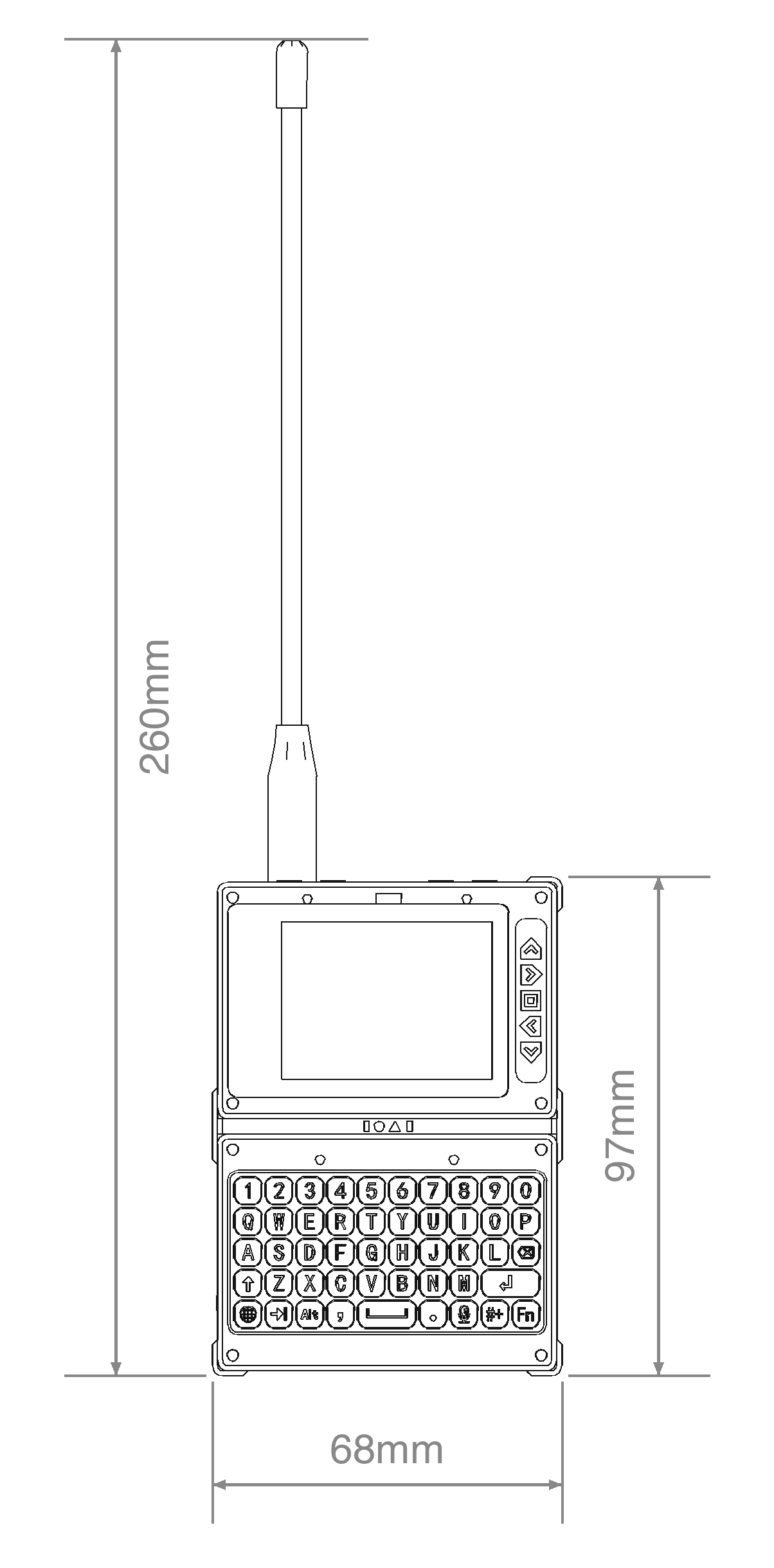
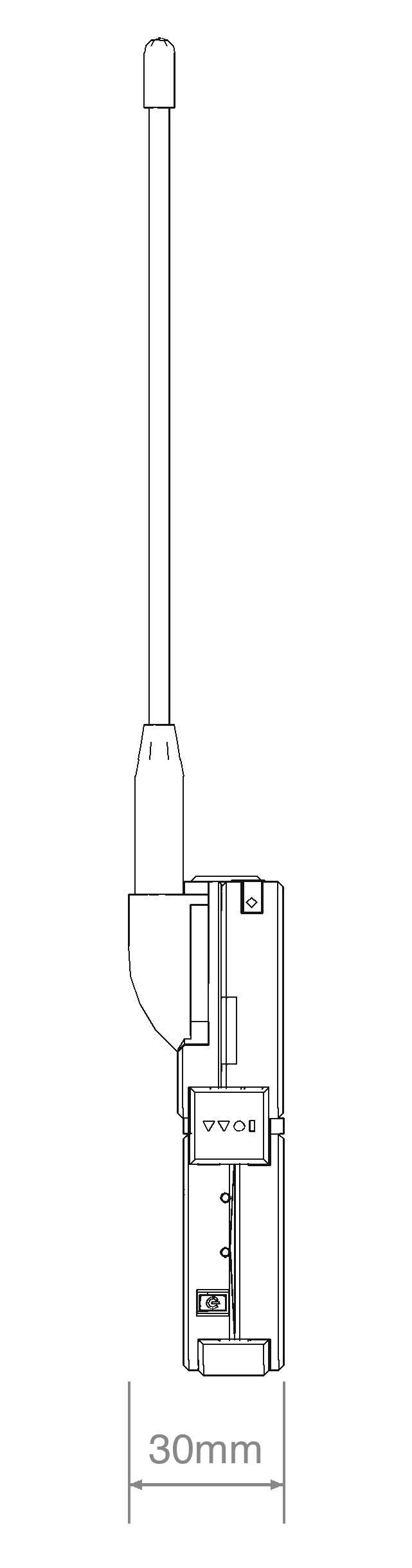
| Dimensions | 68 × 97 × 30 mm (260 mm with the antenna up) |
| Status | Launched |
Assembly
Mesh Deck Pager is built in two sections. The upper section is the Core module with LoRa Pager on its back. The lower section is the keyboard with the Power (battery) module behind it. The battery module connects to the Core module by a 7-pin power cable, and the keyboard connects to the Core module by a 12-pin FPC cable. Frames at the four corners of each module hold the whole assembly together. See Frame & Connections for the connector standard, and the Compatibility Matrix for the combination rules.
Frame
Attaky has a coding system for Frames. Each Frame has a unique code, and most codes show which Complete Build the Frame was designed for and where it goes on that build. Some Frames are shared between builds, so different Complete Builds may share the same Frame and code. Here is the list of Frames that this Complete Build uses.
| Frame (code) | Quantity |
|---|---|
| ◆ | 1 |
| ▮ ● ▲ ◆ | 1 |
| ▮ ● ▲ ▲ | 1 |
| ▮ ● ▲ ▮ | 1 |
| ▮ ● ▲ ◼ | 1 |
| ▮ ● ◤ ◆ | 2 |
To learn more about the Attaky Frame system, visit the Frame page. You can also visit the 3D model gallery, which shows where each Frame goes and has 3D-printable files to download, so you can print the Frames yourself and modify your build to fit your needs.
Mechanical
| Item | Value |
|---|---|
| Body | 68 × 97 mm |
| Thickness | 30 mm |
| Height with antenna up | 260 mm |
Operating conditions
| Item | Value |
|---|---|
| Operating temperature | 0–40 °C (32–104 °F) |
| Water resistance | None (not waterproof, no IP rating) |
Keep it dry, out of direct sunlight, and away from prolonged heat, and do not leave it in a parked car.
Check the battery revision
This build comes with either Standard Cell 1.0 or 1.1. The two versions power on and charge differently, so see the Standard Cell 1.0 datasheet or the Standard Cell 1.1 datasheet for your battery module's version.